
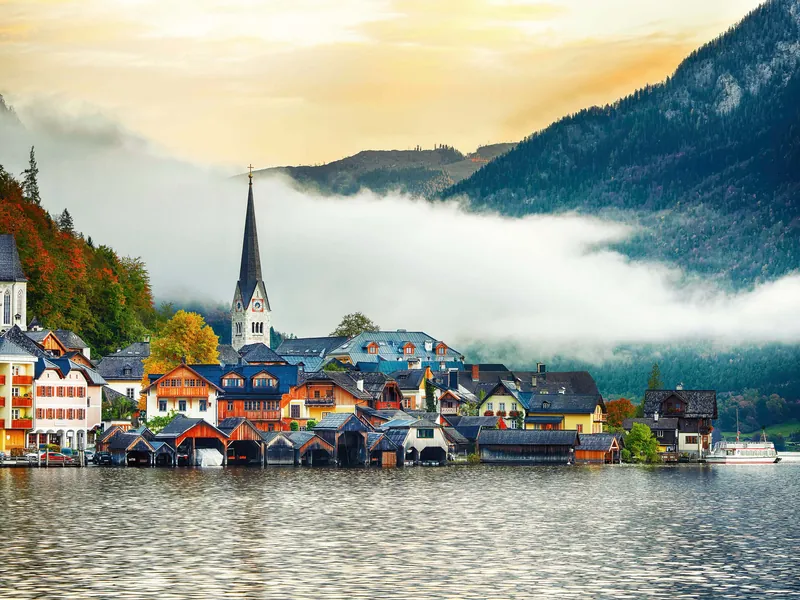
L’angle de la carte postale
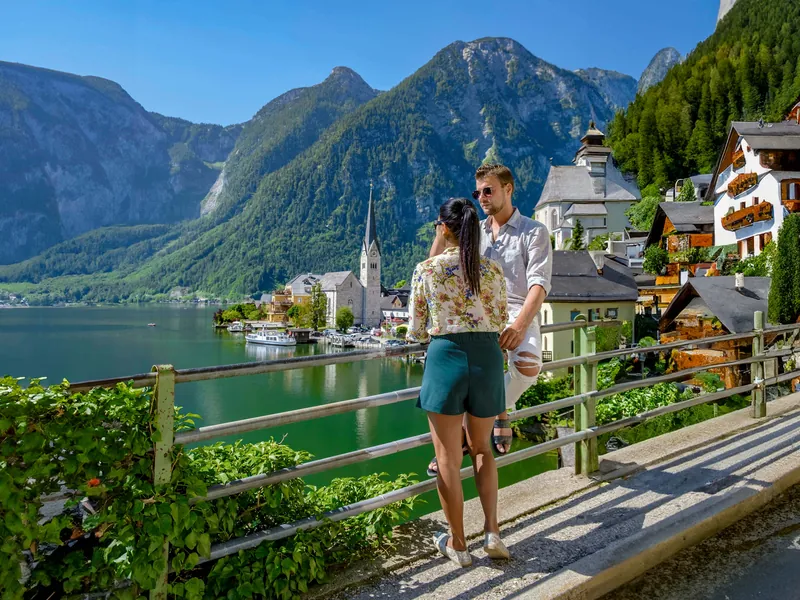
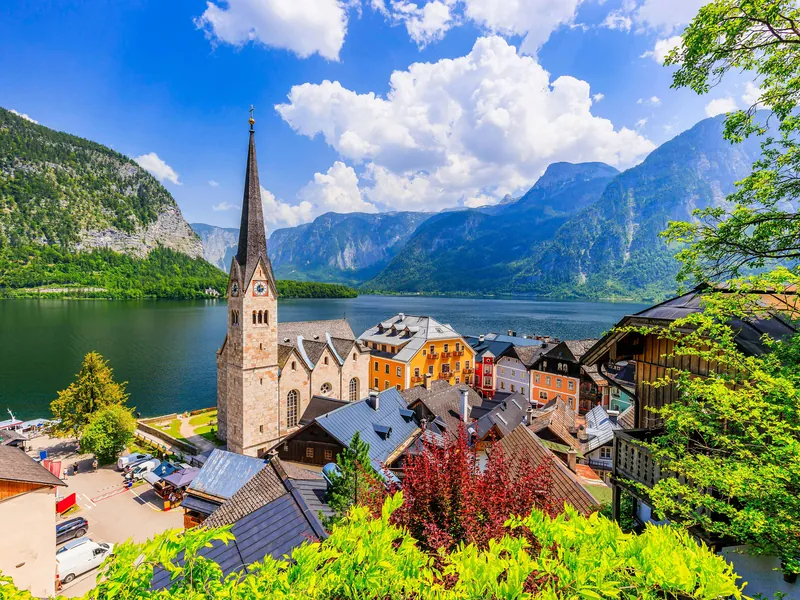
La vue de tous les clichés se prend à l’extrémité nord du village, le long de la Gosaumühlstraße. Venez au lever du jour, vous l’aurez presque pour vous.
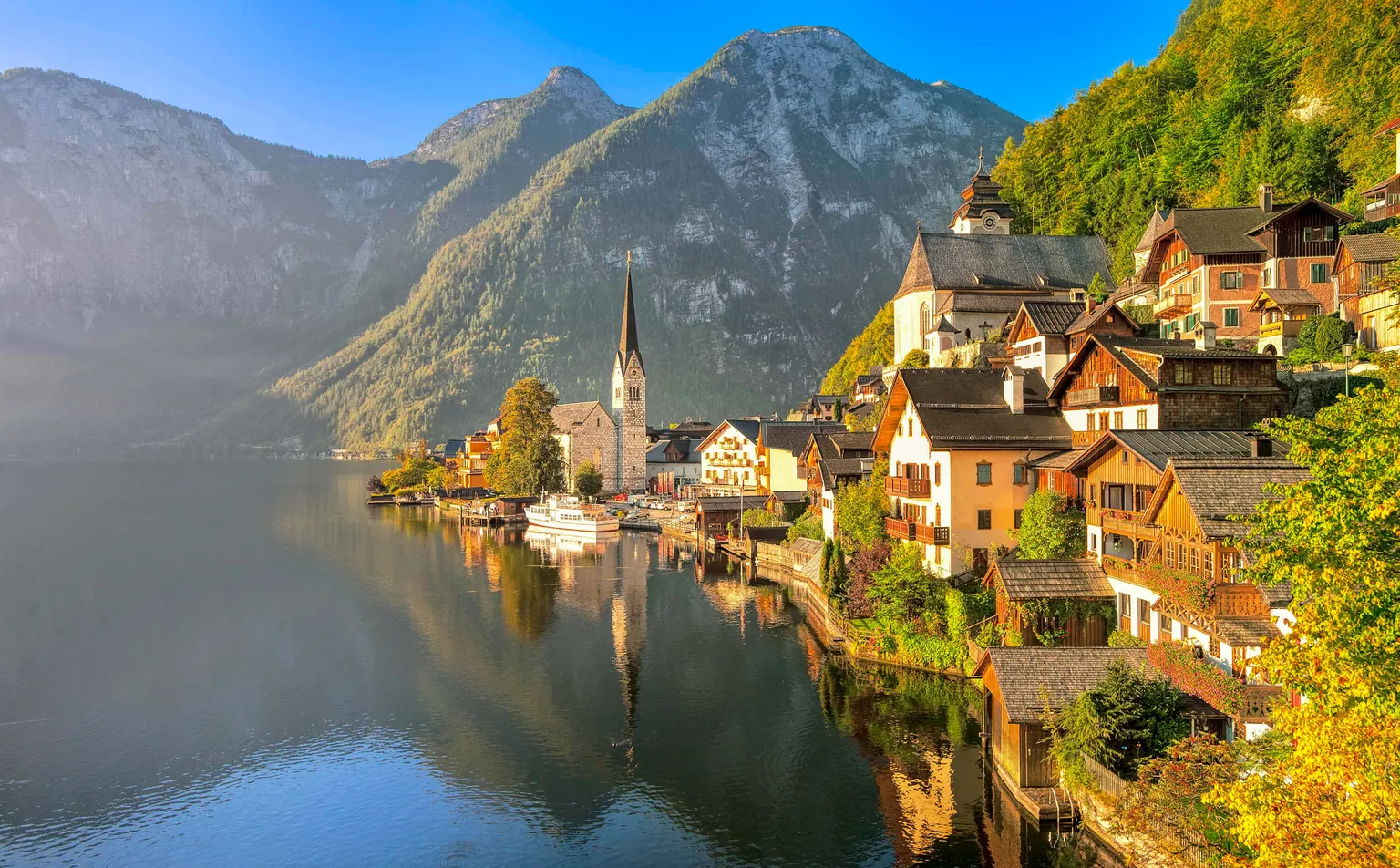
Environ 750 habitants, 1,2 million de visiteurs en 2025 : faites le calcul. Ce guide vous range du côté de ceux qui voient le village, pas de ceux qui attendent leur tour pour le photographier. Quoi visiter, à quelle heure arriver, et comment traverser les ruelles en sachant ce que vous regardez.
Voici les premières minutes du parcours de Hallstatt. Stefan, mineur de son état, reconnaît volontiers qu’il n’appartient plus tout à fait à notre siècle. Appuyez sur lecture.
Extrait en anglais. La visite complète existe en français dans l’application.
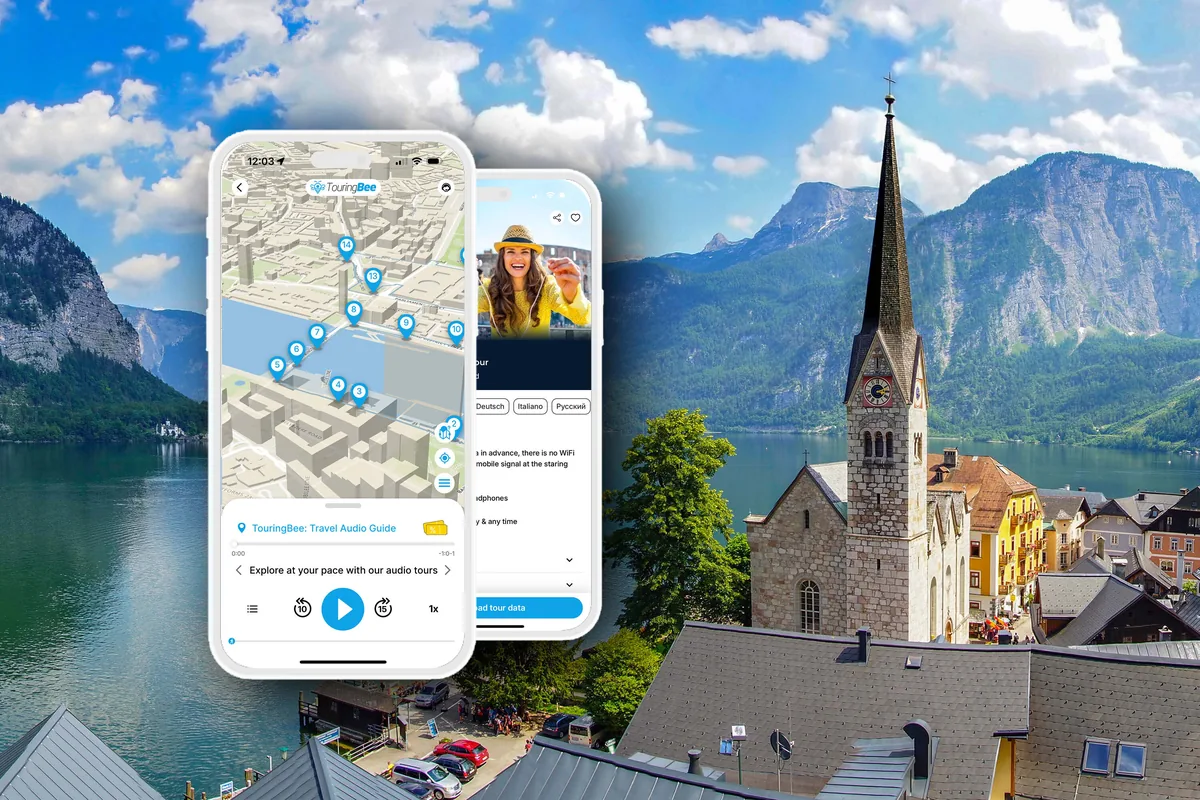
Une balade en autonomie du débarcadère de Lahn au belvédère du patrimoine mondial : un peu plus d’un kilomètre, 17 étapes. Comptez une heure et demie si vous résistez aux pâtisseries. La carte de l’application TouringBee vous situe, vous lancez chaque enregistrement au bon endroit, sans réseau.
Au programme : l’ossuaire, le Marktplatz, la colonne de la Sainte-Trinité, l’église évangélique et l’église paroissiale de l’Assomption. S’y ajoute tout ce qu’aucun panneau n’explique. Pourquoi les maisons s’empilent les unes sur les autres. Ce que les femmes descendaient de la montagne deux fois par jour. Et ce qui, en 1846, a donné son nom à toute une époque européenne.
Le détail de la visiteLes billets pour l’ossuaire, la mine de sel et le musée restent à votre charge.
Hallstatt doit sa célébrité à un cadrage. Elle devrait plutôt venir du sous-sol : ce village a donné son nom à la civilisation de Hallstatt, tout un pan de la préhistoire européenne.
On creusait déjà ici avant que Stonehenge ne sorte de terre et avant les pyramides de Gizeh. Un pic taillé dans un bois de cerf, retrouvé dans la mine, remonte à environ 5000 av. J.-C. Les fouilles du Musée d’histoire naturelle de Vienne repoussent les premières traces à quelque 7 500 ans. L’exploitation souterraine organisée démarre vers 1500 av. J.-C. et cesse vers 1245 av. J.-C., quand une coulée de boue ferme les galeries.
Le nom vient de là. Hall désigne le sel dans une langue ancienne ; Hallstatt, c’est l’endroit du sel. Le sel explique aussi les trouvailles : il conserve le bois, le cuir, les tissus et les cordages. En 2002, des mineurs ont dégagé dans la montagne un escalier de bois daté par ses cernes de 1344 av. J.-C. : le plus ancien escalier en bois d’Europe.
En 1846, Johann Georg Ramsauer, maître de la mine, ouvre une tranchée sur le versant au-dessus du village et tombe sur une nécropole préhistorique. Il creuse jusqu’en 1863 : 980 tombes et 19 497 objets. Des épées à poignée d’ivoire, des perles de verre, des bronzes. Il consigne tout dans des listes et des aquarelles, à une époque où personne ne fouillait avec ce soin.
En 1874, le préhistorien suédois Hans Hildebrand emprunte le nom du village pour désigner le premier âge du fer en Europe centrale. La période de Hallstatt court de 800 à 450 av. J.-C. environ, du nord-est de la France au nord-ouest des Balkans. Les fouilles n’ont jamais vraiment cessé : le Musée d’histoire naturelle de Vienne creuse ici sans interruption depuis les années 1960.
Jusqu’à la fin du XIXe siècle, aucune route digne de ce nom ne desservait Hallstatt. On franchissait les cols ou on traversait le lac. D’où le tracé du chemin de fer, ouvert en 1877 sur la rive d’en face : depuis, les voyageurs terminent en bateau. C’est encore la plus belle façon d’arriver.
Les Habsbourg mettent la main sur le sel très tôt : droit de marché en 1311, blason offert par Maximilien Ier en 1494. Entre 1595 et 1607, ils font construire un saumoduc en bois — une conduite de saumure — d’environ 40 km jusqu’à Ebensee. Il franchit les montagnes, fonctionne toujours et passe pour la plus ancienne canalisation industrielle du monde.
En 2012, un promoteur chinois inaugure dans la province du Guangdong une copie grandeur nature du centre du village. À peu près au même moment sort un dessin animé avec une reine des neiges, et Internet décrète qu’Arendelle, c’est Hallstatt. Les dessinateurs de Disney n’ont jamais rien dit de tel : ils sont allés en Norvège. La ressemblance a suffi.
Résultat : quelque 750 habitants encaissent environ 1,2 million de visiteurs à la journée par an, contre seulement 132 000 nuitées. D’où l’importance du quand, ici plus que partout ailleurs en Autriche.
On traverse Hallstatt en un quart d’heure. Voici ce qui mérite qu’on s’arrête.
La vue de tous les clichés se prend à l’extrémité nord du village, le long de la Gosaumühlstraße. Venez au lever du jour, vous l’aurez presque pour vous.
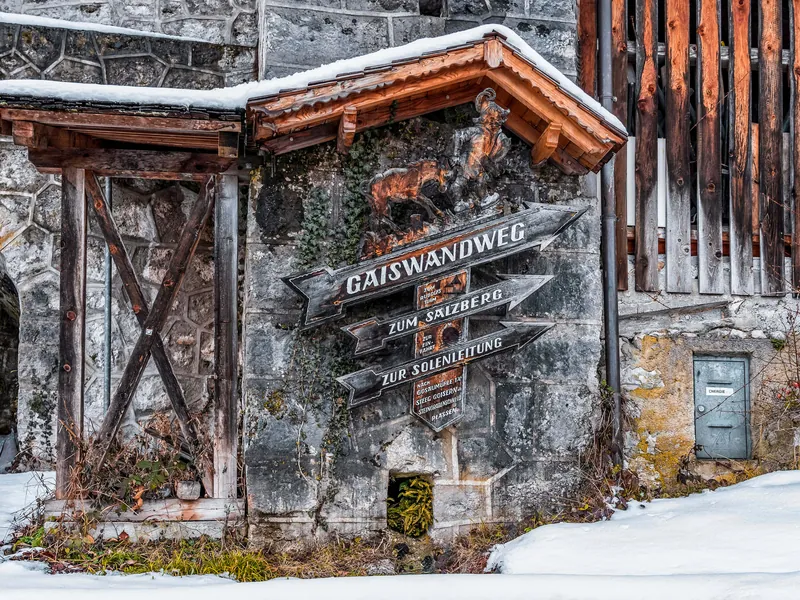
La plus ancienne mine de sel du monde : toboggans de bois, galerie de l’âge du bronze, plateforme Skywalk au-dessus des toits. Fermée pour travaux jusqu’au 29 août 2026 — détails plus bas.

Environ 1 200 crânes dans la chapelle Saint-Michel, dont 610 peints à la main : noms, dates, couronnes de fleurs. Entrée 2 €. Le dernier crâne y a été déposé en 1995.
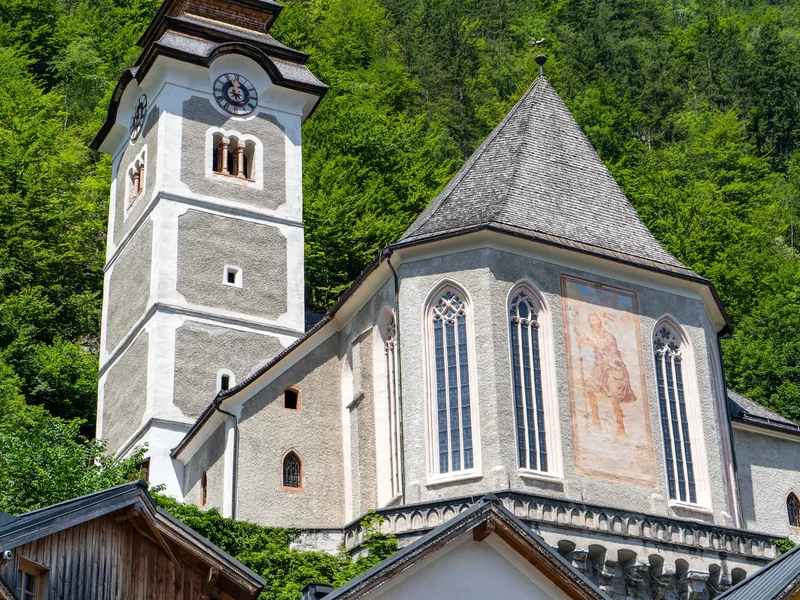
Le clocher fin qu’on voit partout appartient à l’église évangélique. Au-dessus, l’église paroissiale catholique garde un autel à volets du XVe siècle, et l’affaire de vol qui va avec.
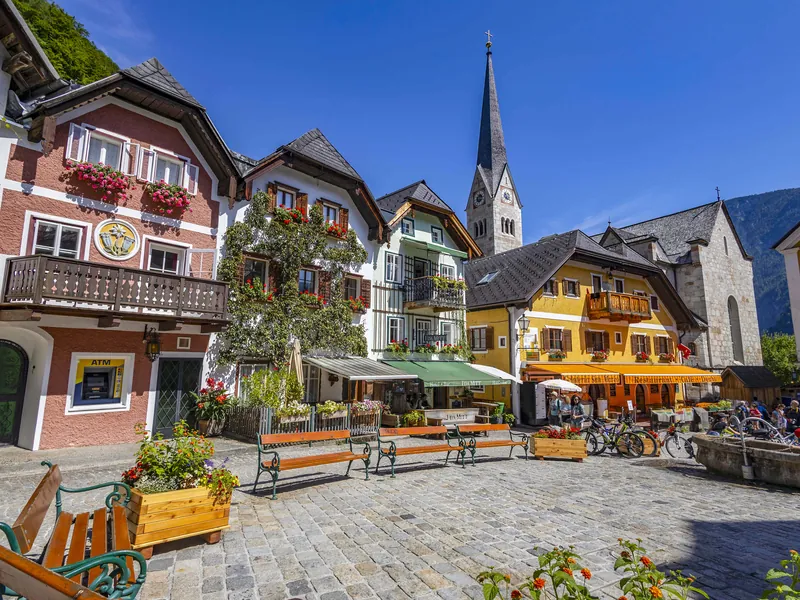
Reconstruit après l’incendie du 20 septembre 1750, qui emporta environ 35 maisons. La colonne de la Sainte-Trinité, au milieu, en est sortie intacte.
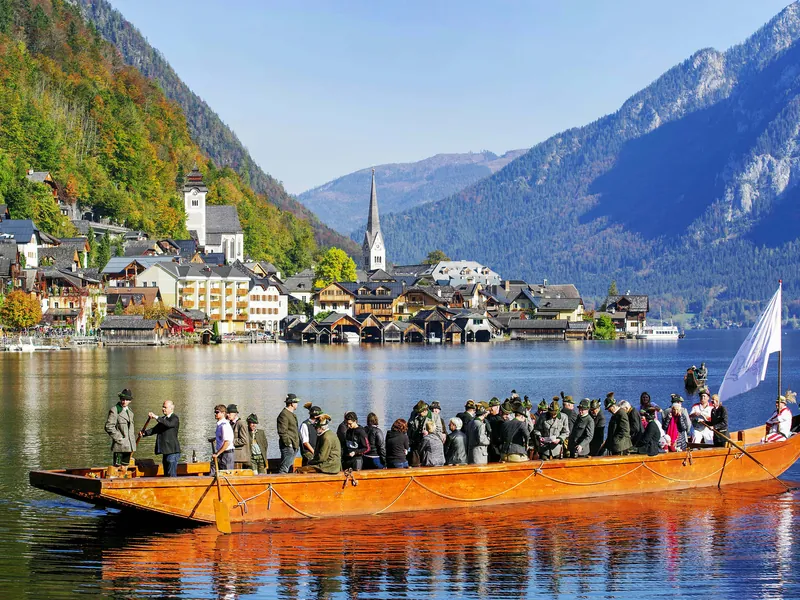
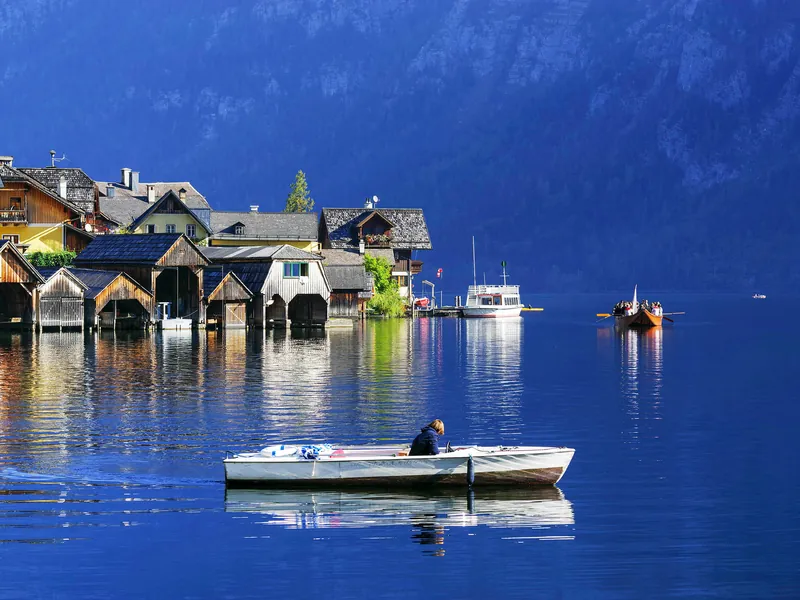
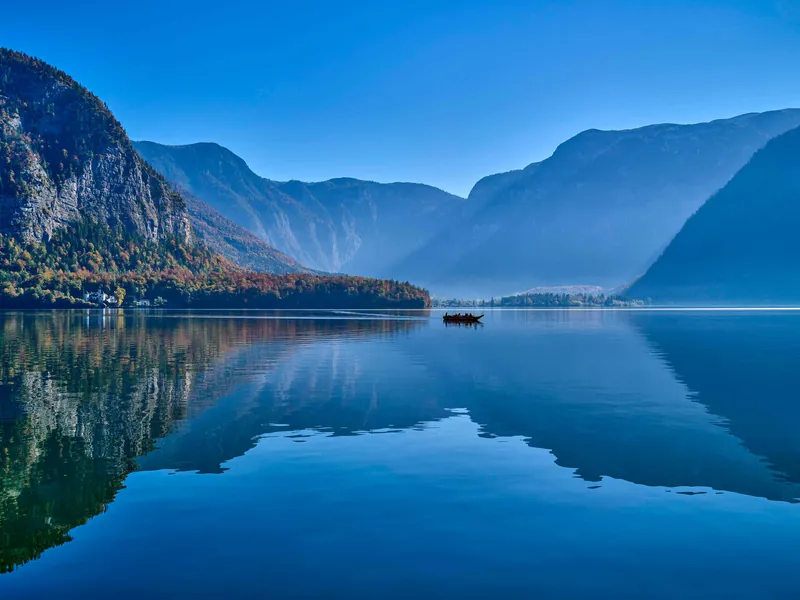
Bateaux de ligne, croisière d’une heure, cygnes légués par une impératrice, et une eau qui dépasse rarement 20 °C, même en août.
Un paiement de 9,99 €. L’e-mail d’activation arrive en quelques minutes.
TouringBee, sur iPhone ou Android. Récupérez le son en Wi-Fi avant de quitter l’hôtel.
Ouvrez la carte, lancez l’étape 1 et marchez. Pas de groupe, pas d’horaire, pas de data.
Environ une heure et demie plus tard, au meilleur point de vue du village. Ensuite : un café, la mine, ou le sentier du saumoduc.
À savoir pour 2026 : les Salzwelten Hallstatt restent fermés le temps de construire un nouveau funiculaire. Cela vaut pour la mine de sel, le funiculaire Salzbergbahn et la plateforme Skywalk. Tout rouvre le 29 août 2026. Ensuite : mine et funiculaire 49 €, mine seule en montant à pied 33 €, aller-retour en funiculaire sans la mine 29 €. Ouverture de 9 h 30 à 16 h 30 jusqu’au 24 octobre, horaires réduits après. Vérifiez sur salzwelten.at avant de bâtir une journée autour.
Entre 16 h 30 et 9 h 30, Hallstatt appartient à ses quelque 750 habitants et à ceux qui ont réservé un lit. Les lits sont rares : quelques dizaines de pensions dans le village, davantage à Obertraun, de l’autre côté de l’eau. Pour l’été, tout part des mois à l’avance. Si vous voulez vivre l’endroit plutôt que le photographier, c’est la décision la plus rentable de votre voyage.
Voir les hébergements à HallstattLa marche dans le village ne coûte rien et l’audioguide vient de chez nous. Le reste passe par des partenaires : nous touchons une commission, vous ne payez pas plus cher.
Presque tout le monde arrive de l’une des deux. TouringBee vous y attend aussi, avec une visite à pied.
La vieille ville, la vue depuis la forteresse et les adresses de Mozart, à votre rythme. Parfait pour la veille de votre journée à Hallstatt.
Découvrir la visite de SalzbourgLe Ring, les adresses impériales et les cafés, racontés comme il faut. Utile avant ou après le long aller-retour vers l’ouest.
Découvrir la visite de VienneLes guides détaillés sortent d’ici l’automne 2026. Voici les trois premiers.
Train, voiture, bus ou excursion : durées, prix et ce qui colle vraiment à votre journée.
Bientôt →L’affluence heure par heure, et les deux créneaux où le village redevient un village.
Bientôt →Ce que change la réouverture de 2026, ce que comprend la visite, et si ça vaut 49 €.
Bientôt →
Eugene a fondé TouringBee, qui conçoit des visites audio en autonomie dans plus de cent destinations. Nous avons écrit et arpenté le parcours de Hallstatt sur place, avec des historiens et des sources locales. Les informations pratiques de cette page viennent des exploitants eux-mêmes — Salzwelten, la commune de Hallstatt et le musée — et nous les corrigeons dès qu’elles bougent.
Faites la partie marche avec quelqu’un qui sait ce que vous regardez. Dix-sept étapes, hors ligne, à votre rythme, du débarcadère au plus beau point de vue du village.
Certains liens de cette page sont des liens affiliés. Si vous réservez par leur intermédiaire, nous touchons une petite commission, sans supplément pour vous. Cela ne change jamais nos recommandations. Prix, dates d’ouverture et horaires ont été vérifiés en août 2026 sur les sites des exploitants : confirmez toujours avant de partir.